To think clearly about Middle East wars, you need to hold multiple thoughts in your head at the same time. It’s a complicated, kaleidoscopic region where religion, oil, tribal politics and great power politics interweave in every major story. If you are looking for a black-and-white narrative, you might want to take up checkers. So, here are my four thoughts on Iran — at least for today.
First, I hope this effort to topple the clerical regime in Tehran succeeds. It is a regime that murders its people, destabilizes its neighbors and has destroyed a great civilization. There is no single event that would do more to put the whole Middle East on a more decent, inclusive trajectory than the replacement of Tehran’s Islamic regime with a leadership focused exclusively on enabling the people of Iran to realize their full potential with a real voice in their own future.
Second, this will not be easy, because this regime is deeply entrenched and is hardly going to be toppled from the air alone. Israel has not been able to eliminate Hamas in Gaza after over two years of a merciless air and ground war — and Hamas is right next door. That said, even if this U.S.-Israeli attack on Iran does not lead to the uprising by the Iranian people that President Trump has urged, it could have other, unanticipated, beneficial effects, like producing an Islamic Republic 2.0 that is much less threatening to its people and neighbors. But it just as easily could result in unanticipated dangers, like the disintegration of Iran as a single geographic entity.
Third, we must remember that the timing of the end of this war will be determined as much by the oil markets and the financial markets as by the military state of play inside Iran. Iran is on the edge of economic collapse, with a currency worth little more than wallpaper. Europe has become much more dependent on liquefied natural gas from the Persian Gulf to run its economies, since phasing out purchases of natural gas from Russia. A sustained burst of inflation caused by higher energy prices would anger Trump’s base, many of whom already don’t like being dragged into another Middle East war. There are a lot of people who will want this war to be short, and that will affect how and when Trump and Tehran negotiate.
Fourth, we must not let this war to bring democracy and the rule of law to Iran distract us from the threats to democracy and the rule of law posed by Trump in America and by Prime Minister Benjamin Netanyahu in Israel. Trump wants to promote those ideals in Tehran, even as his ICE agents operated for two months with limited regard for legal restraints in my home state of Minnesota and as he floats ideas about restricting who can vote in our next election. If the war in Iran enables Netanyahu to win the Israeli elections planned for this year, it will be a major propellant to his efforts to annex the West Bank, cripple the Israeli Supreme Court and make Israel an apartheid state, which would be a major blow to American interests in the region beyond Iran.
Life as an opinion columnist would be easy if every war you had to take a stand on were the American Civil War and every leader were Abraham Lincoln. But they are not, so let’s dig a little deeper into these four thoughts on Iran.
Sign up for the Opinion Today newsletter Get expert analysis of the news and a guide to the big ideas shaping the world every weekday morning. Get it sent to your inbox.
While you’d never know it if you listened to the campus left in recent years, the Islamic Republic of Iran has been the biggest imperialist power in the region since 1979, cultivating proxies to control four Arab states — Syria, Lebanon, Iraq and Yemen — and undermining liberal reformers in all four by promoting sectarian divisions.
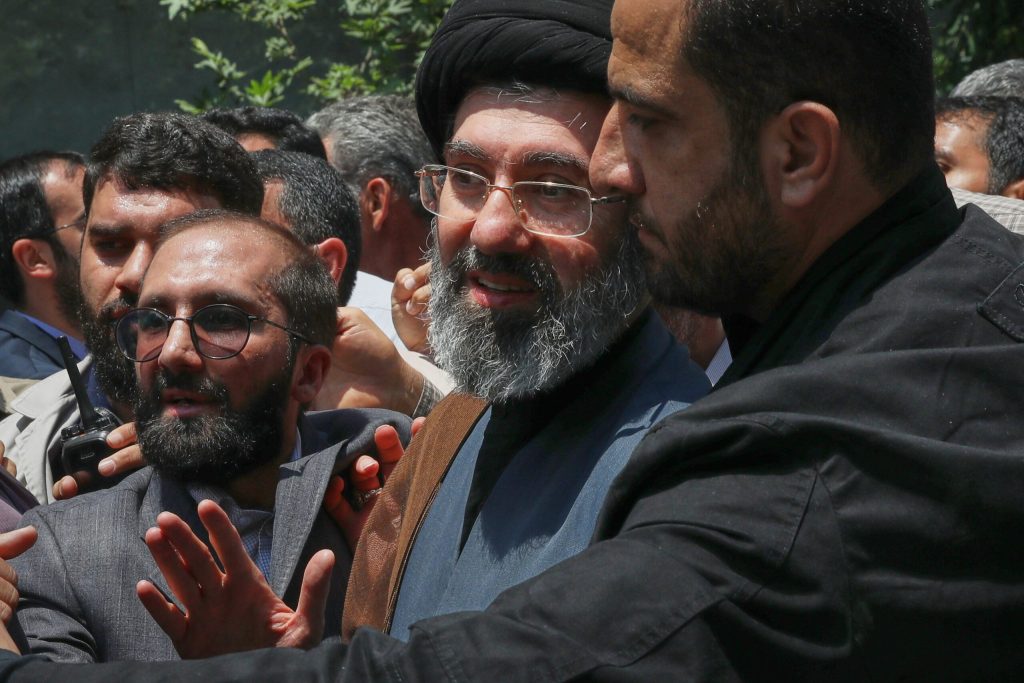
Just the weakening of the Tehran regime, thanks to Israeli and American hammer blows over the past two years, has led to the downfall of the Iranian-bolstered Assad regime in Syria and enabled Lebanon to escape the vise grip of the Iranian-backed Hezbollah militia, which in turn has given space for Lebanon’s most decent government in decades — one led by Prime Minister Nawaf Salam and President Joseph Aoun. That is why the death of Iran’s supreme leader, Ayatollah Ali Khamenei, is being quietly or loudly celebrated across the region.
Also, the Iranian people are among the most naturally pro-Western in the region. If that impulse is allowed to surface and spread, and replace the divisive, radical Islamist poison propagated by the Iranian regime, we have the possibility for a much more inclusive Middle East.
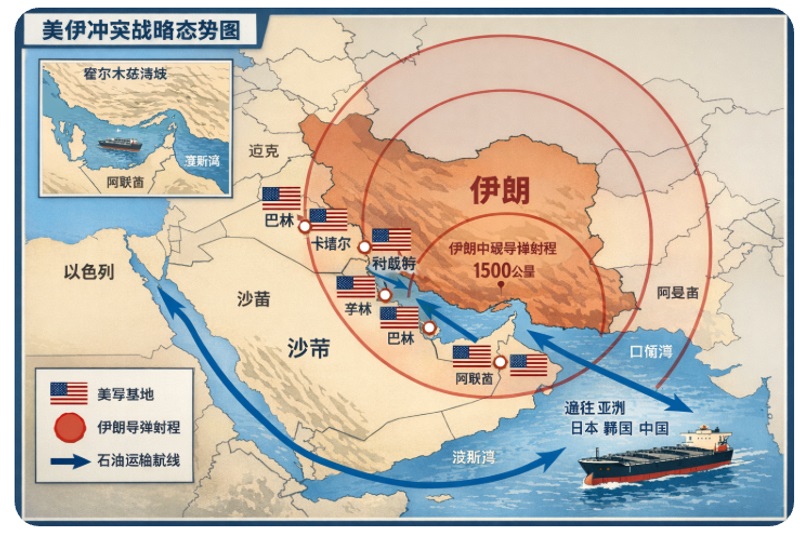
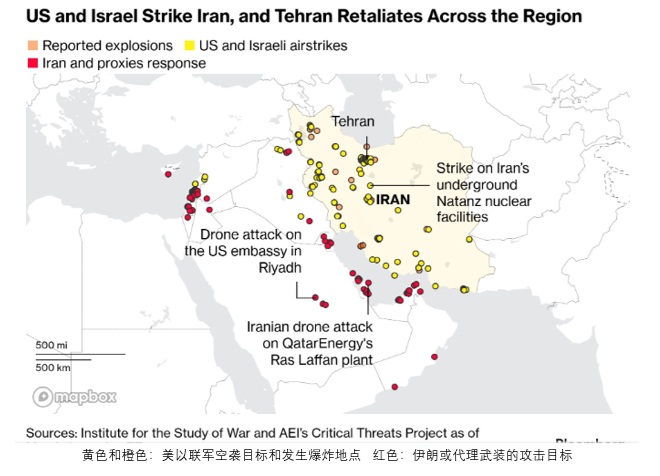
As the Lebanese Emirati strategist Nadim Koteich put it to me: It is not for nothing that one of the most popular chants of anti-regime protesters in Iran has been: “No Gaza, no Lebanon. My life for Iran.” Many Iranians have been sickened to watch their resources squandered on militias fighting Israel. It is also no accident, Koteich noted, that Iran has just launched rockets against airports, hotels and ports of the modernizing Arab Gulf states.
“They are attacking the infrastructure of openness and integration and the Abraham Accords — it was the old Middle East attacking the new Middle East,” Koteich added. Khamenei’s death, hopefully, “is the death of Khamenei’s idea that the Middle East should be defined by resistance and not inclusion and integration.”
Hopefully it will also end the double game practiced by Khamenei and his predecessors like Mahmoud Ahmadinejad — who served as Iran’s president from 2005 until 2013 and was also reported dead from an Israeli-U.S. airstrike — that Iran has the right to openly shout “Death to America” and “Death to Israel” and then claim that it also has the right to be treated like Denmark, or to enrich uranium for “peaceful” purposes.
Trump and Netanyahu finally called out that game.
As for the idea that the Iranian people will now come together and topple the regime, it is hard to see that happening anytime soon without a clear leader and a common agenda.
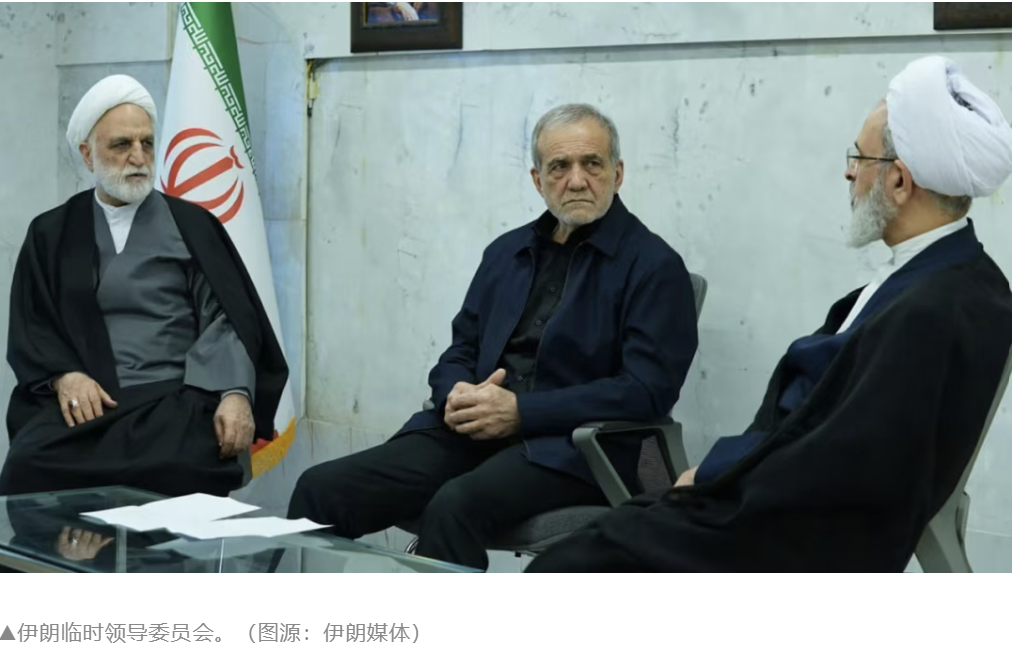
The Iranian analysts I speak to say the more likely outcome is a kind of Islamic Republic 2.0, in which leading regime reformers — like Hassan Rouhani, who served as the seventh president of Iran from 2013 to 2021, and has been an increasingly outspoken critic of Khamenei’s hard line, or the former foreign minister and nuclear negotiator Javad Zarif — press the surviving leadership to negotiate a deal with Trump. That deal could be one that gives up Iran’s nuclear program and accepts limits on its proxy wars and ballistic missiles — in other words, whatever Trump wants — in return for an end to economic sanctions and regime survival.
Such an Islamic Republic 2.0 regime might then be able to oversee a transition to a real Iranian democracy again. But Trump could also face accusations of throwing a life preserver to a dying regime that recently killed at least 6,800 protesters, according to the U.S.-based Human Rights Activists News Agency, and likely many more. In other words, starting this war was relatively easy. Ending it will not be.
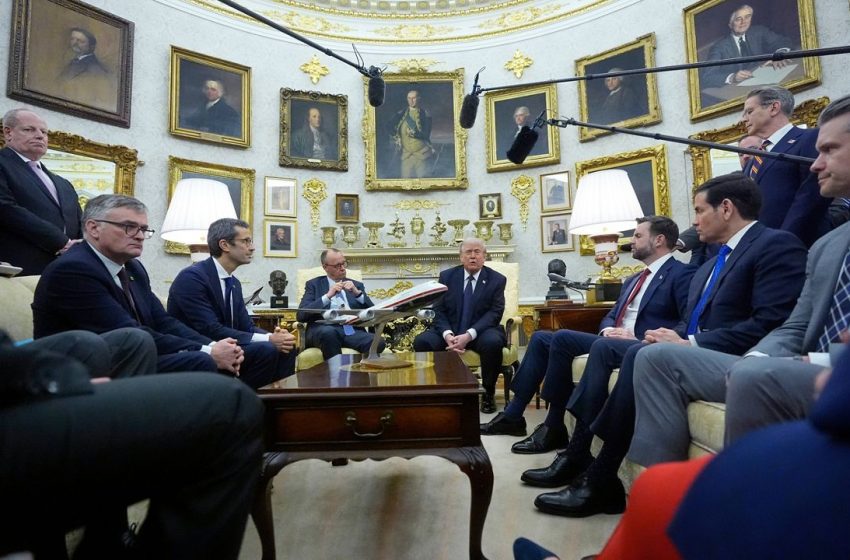
Such a deal might be tempting to Trump, though, to avoid a prolonged war, a recession triggered by soaring oil prices or the disintegration of Iran. Which is why I was not surprised to hear Trump tell The Atlantic: “They want to talk, and I have agreed to talk, so I will be talking to them.”
As this column has noted before, in the Middle East the opposite of autocracy is not necessarily democracy. Often it is disorder. Because when Middle East dictatorships are decapitated, one of two things happens. They either implode, like Libya did, or they explode, like Syria did.
Persians are only around 60 percent of Iran’s population. The other 40 percent is a mosaic of minorities, mainly Azeris, Kurds, Lurs, Arabs and Baloch. Each has links with lands outside of Iran, especially Azeris with Azerbaijan and Kurds with Kurdistan. Prolonged chaos in Tehran could lead any of them to split off and for Iran to, in effect, explode.
Iran has witnessed the collapse of governments or the fall of rulers throughout its history. Every time, “Iran stayed intact,” said Koteich. “For the first time I am not sure it will stay intact.”
If you want to see $150-a-barrel oil, that kind of Iranian disintegration would take you there. Iran’s oil exports of 1.6 million barrels a day, which go mostly to China, would be taken completely off the global oil market. Some 20 percent of all global oil trade moves through the Strait of Hormuz, which Iran can shut down. Insurance rates for oil shippers are already skyrocketing, and some 150 tankers in the Gulf are reportedly frozen in place.
Meanwhile, over in Beijing, President Xi Jinping has to be wondering how his weapons systems would stack up against the U.S.-supplied ones to Taiwan, having seen U.S.-made fighter planes and smart missiles easily evade or destroy Iran’s Russian-supplied antiaircraft systems and assassinate much of Iran’s national security elite in their homes and offices. Maybe this is not the week to invade Taiwan — or even next week.
It might be a good week, though, for Beijing to look at all the Iranian people spontaneously dancing in the streets to celebrate the death of Khamenei and ask itself if the People’s Republic of China should have been propping up his regime with oil purchases all these years. Maybe it should have been on the side of the Iranian people.
It is way too early to predict how this war will affect two critical 2026 elections — one in Israel and one in the United States.
For Trump it is simple. He does not want to see the word “quagmire” in any headline with his name in it ahead of the midterms in November. As for Netanyahu, I could imagine him calling for early elections to use the downfall of the Iranian regime to keep himself in power. But victory over Iran could also complicate his politics. Netanyahu has notched short-term military defeats over Hamas, Islamic Jihad, Hezbollah and Iran, but he has not translated a single one of them into long-term diplomatic or political gains. To do so would require him to agree to negotiate again with the Palestinians based on a framework of two states for two peoples.
The opportunity for Israel could be enormous: If the Islamic Republic of Iran is either toppled or defanged, I have little doubt that Saudi Arabia, Lebanon, Syria, Oman, Qatar, Kuwait and maybe even Iraq would feel much more comfortable normalizing relations with Israel — on the condition that Netanyahu does not annex Gaza or the West Bank, but agrees instead to a plan for separation and a two-state solution. Would Netanyahu rise to that opportunity? Would Israeli voters punish him if he doesn’t?
But I get ahead of myself. I expect by Wednesday there will be at least three more points competing in my head to make sense of it all, because this is the most plastic, unpredictable moment in the Middle East since the Islamic Revolution in 1979. Everything — and its opposite — is possible.