7月26日,香港《南华早报》发表了一篇评论文章,题目是:《250年来美国的“中国梦”如何演变成其最大的战略挑战》(How America’s 250-year China Dream Became its Greatest Challenge)。
文章称,1784年2月,美国一艘名为《中国皇后号》商船从纽约出发,目的地是中国,6个月后,抵达中国广东。当时的中国还在清朝时代,而美国的《独立宣言》发表后还不到10年,国际社会承认美国独立的《巴黎公约》签订还不到一年。那时的美国,既没有海军,也没有什么国际地位,但却已经有了一个“中国梦”。
两个半世纪后的今天,中国却成为美国最主要的竞争者。如今,全世界两个最大的经济体,中国和美国,被锁定在贸易、技术、安全、全球秩序的斗争之中。
历史学家认为这是中、美两国关系的起点。在这段关系中,美国不断重塑对中国的定义——从垂涎的市场到令人钦佩的文明,从传教项目到战略对手。每一次重塑,都既反映了美国的自身,也反映了中国的自身。
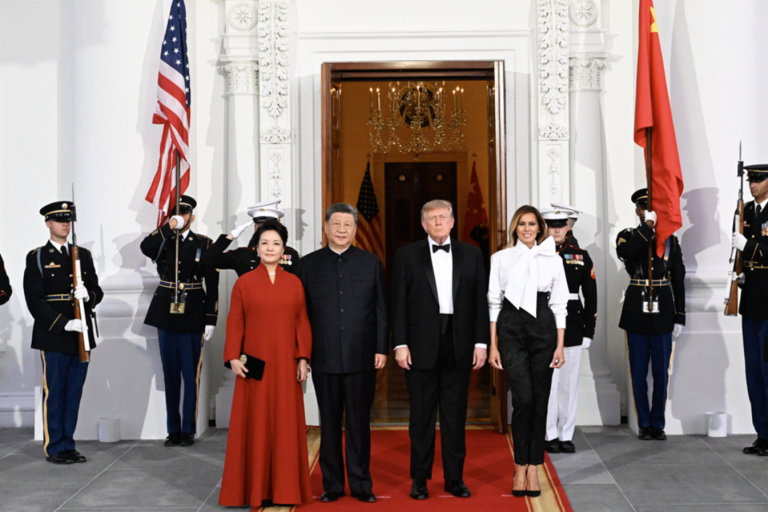
今年5月,美国总统特朗普访问北京时,在习近平主席主持的国宴上提到了《中国皇后》,回顾了第一艘抵达中国海岸的美国商船。
《南华早报》回顾了250年来的历史,美国实际上经历了四次”重新认识中国”:
18世纪,美国视中国为“贸易伙伴”,中国是个巨大市场,是美国商人的梦想;
19世纪,美国视中国为“文明对象”,希望把西方文明、基督教带进中国;
20世纪,美国视中国为“合作伙伴”,从孙中山到蒋介石,再到改革开放后的中国,美国始终相信中国最终会走向自由市场和民主制度,成为国际秩序利益攸关方。。
21世纪,美国视中国为“战略竞争者”。美国终于承认,中国不会按照美国设想的发展道路前进,而是形成了另一种现代化模式。
《南华早报》认为,美国最大的误判,不是低估了中国的实力,而是高估了中国会变成“另一个美国”。文章指出,过去几十年,美国战略界存在三个假设:一、经济发展后,中国一定会民主化;二、中国加入WTO后,会逐渐接受美国制定的国际秩序;三、中产阶级壮大后,会要求西方式政治。
如今美国终于达成共识:“和平演变“没有实现,“接触”政策失败了,“中国梦“破灭了。美国不得不改变其对华战略构思。
美国的战略改变经历了二十多年的渐进演变。从克林顿政府支持中国加入WTO,到奥巴马提出”亚太再平衡”,再到特朗普发动贸易战,拜登推动”小院高墙”,说明美国对华战略调整不是某一届政府的突变,而是跨党派、持续二十余年的战略重构。
《南华早报》把重点放在美国战略思想的演变上,认为美国最大的误判是相信中国最终会变成”另一个美国”。
其实真正发生变化的不是美国“梦想的破灭”,而是中、美两国的力量对比。
1978年,中国的GDP是美国的5%,今天按照购买实力评价(PPP),中国已经超过美国;制造业的规模,中国约战全球30%以上,美国约15%,全球最大的工业国已经不是美国。
美国真正担心的是,中国第一次拥有了挑战美国的综合实力和能力。中美之间的战略竞争几乎是必然的。
国际关系中,一个国家是否调整战略,很少仅仅因为理念失败,更主要是因为实力结构发生变化。换句话说:如果今天中国仍只有美国5%的经济规模,即使共产党仍然执政,美国也未必会发动如此全面的战略竞争。
但是,“意识形态“因素也不容低估。
拜登政府提出,中美之间是“民主与专制”的竞争。近年来,美国官方文件不断强调,中国不仅是经济竞争者,也是制度竞争者。最近,特朗普更是直接提出要对抗“共产主义”。
很多美国人认为:中国也改变了。例如:改革开放时期,中国长期坚持“韬光养晦”,后来逐渐提出“中国梦“、 民族复兴 、一带一路 、全球发展倡议 、全球安全倡议。 中国国际影响力不断扩大,美国因此开始重新评估中国。
《南华早报》文章倾向于美国误判了中国,其实双方都存在误判。
美国的误判是以为经济发展一定导致民主化;全球化会改变中国的政治制度;接触政策能够塑造中国。中国也存在误判,例如长期低估美国科技创新能力;低估美元体系的韧性;认为美国会迅速衰落;高估全球南方会全面倒向中国。
事实上,近几年不少中国学者也开始反思:”东升西降”是一种趋势判断,但如果把它理解为美国会快速失去创新能力,就容易产生战略误判。
现实是:今天美国仍然拥有最强金融体系、最强大学体系、最强创新体系、最强军事联盟、最强资本市场 。而中国则拥有全球最大制造体系、全球最完整产业链、巨大国内市场、快速技术追赶能力。
换言之,双方都远没有达到可以压倒对方的程度。
美国过去250年的”中国梦”,并不是希望战胜中国,而是希望中国最终融入美国主导的国际秩序;而今天美国面对的最大挑战,不是一个没有融入西方体系的中国,而是一个既深度融入全球经济、又保持自身政治制度和发展道路,并具备与美国长期竞争能力的中国。这种结构性变化,才是中美战略竞争长期化的根本原因。

How America’s 250-year China dream became its greatest strategic challenge
Historians trace how US hopes of trade, reform and friendship gave way to rivalry with the power it once sought to transform
Yuanyue Dangin Washington
Published: 11:00pm, 25 Jul 2026Updated: 12:37pm, 26 Jul 2026
One morning in February 1784, a converted privateer called the Empress of China sailed out of New York harbour. It was bound for a country almost no one aboard had ever seen – China, then ruled by the Qing dynasty.
Six months later, it dropped anchor at Canton, the only port where the Qing government allowed Western maritime trade.
At the time, the Declaration of Independence was less than a decade old, and the Treaty of Paris recognising American independence had been signed less than a year before.
The newborn republic had no navy and little standing in the world. What it did have was a dream of China.
Two and a half centuries later, the country that once drew American merchants across the Pacific has become Washington’s principal competitor. The United States and China, now the world’s two largest economies, are locked in a struggle over trade, technology, security and the shape of the global order.
For historians, that first voyage marked the beginning of a relationship in which America repeatedly reinvented what China represented – from coveted market to admired civilisation, from missionary project to strategic rival. Each reinvention said as much about America as it did about China.
Even during his visit to Beijing in May, US President Donald Trump invoked the Empress of China during the state banquet hosted by President Xi Jinping, recalling the first American merchant ship to reach Chinese shores.
The market
It is easy to forget how important the idea of China was to the founding of America, according to Xu Guoqi, the David H.Y. Chang Professor of Chinese History at the University of Hong Kong (HKU).
The tea that was dumped into Boston harbour in 1773, the act of defiance that helped ignite the revolution, was Chinese tea.
“The dream of independence for future Americans came, to a certain extent, from their dream of the China market,” said Xu.
Tea, which Americans called “green gold”, was effectively a hard currency, he said.
“Everybody seemed obsessed with Chinese tea after the British brought it to the West.”
That fascination predated the US itself, Xu added. “Europeans had dreamed of finding a route to China since the days of Marco Polo, a quest that famously sent Christopher Columbus across the Atlantic in 1492,” Xu said.
“That is the irony of the shared history between China and America – it was interconnected from the very beginning.”
When the Empress of China sailed to Canton in 1784, it embodied a belief that access to the Chinese market could help to secure America’s future.
That belief endured for more than two centuries.
In the 19th century, it took the form of the China trade and, later, the Open Door Policy – Washington’s call for equal commercial access to China rather than allowing foreign powers to divide it into exclusive spheres of influence. It was an era when a weakened Qing empire, battered by the opium wars and unequal treaties, was being forced open by imperial powers.
A century later, the same aspiration reappeared in the language of reform and engagement.
By the time China joined the World Trade Organization (WTO) in 2001, many in Washington and on Wall Street believed opening up the Chinese economy would not only create one of the world’s largest export markets but also reinforce the assumptions of the American-led global economic system.
These hopes were captured in then-US president Bill Clinton’s 2000 remarks supporting China’s WTO accession.
“Economically, this agreement is the equivalent of a one-way street. It requires China to open its markets – with a fifth of the world’s population, potentially the biggest markets in the world – to both our products and services in unprecedented new ways,” he said.
But rather than converging towards the American economic model, China developed a state-led system that Washington increasingly viewed as a strategic challenge instead of an opportunity.
The first Trump administration launched a trade war in 2018. The second expanded it in 2025, signalling a new consensus that China itself had become the challenge.
A mutual misunderstanding
If Americans first imagined China as a market, they also imagined it as one of the world’s great civilisations. But the China they admired was often one they barely understood.
“Americans now easily forget that the United States was a very small country back then, when everything was just being founded,” said Wang Yuanchong, an associate professor of history at the University of Delaware.
“At the start China was strong and America was small, and only slowly did that situation reverse,” Wang said.
When the Empress of China arrived, Wang said, its crew carried a “sea letter”, a kind of all-purpose passport, addressed to no one in particular and merely listing every title its bearers could think of.
“That actually proves they knew nothing,” he said.
“They were completely in the dark about China’s administrative system, its society, its history and culture. They simply came.”
Qing officials, for their part, knew little about the new republic. They saw foreign visitors through the old imperial lens of tribute and trade.
Two centuries later, the ignorance is not mutual, Wang said.
Ordinary Chinese, he said, could name several American presidents, while many Americans “can’t name a single Chinese leader”.
As Americans imagined China, historians suggest that they were also constructing an image of themselves.
Unlike the European empires carving up Qing China, the young republic preferred to see itself as a more progressive kind of power.
One reason was America’s comparatively restrained presence in China during the 19th century.
Unlike other Western powers like Britain and France, the US seized no colonies on Chinese soil and championed the Open Door Policy, which called for equal commercial access rather than exclusive spheres of influence.
In 1868, the Qing court invited the departing US minister to China, Anson Burlingame, to represent China on a mission to the West. Burlingame acted as a mediator between China and Western countries and won the trust of Chinese officials.
The Burlingame Treaty that followed recognised that the two peoples could travel between the countries as equals and study in each other’s country.
Later, the US returned part of the Boxer Rebellion indemnity to fund Chinese schools and scholarships for study in America, benefiting the predecessor of Tsinghua University.
But historians warn that this picture of a kinder America leaves out a lot.
Xu at HKU argues that America’s difference reflected a genuine sense of exceptionalism. Having recently broken from the British monarchy, the US saw itself as fundamentally different from Europe’s imperial powers.
“The US looked down on the old European countries,” Xu said. “They thought they were corrupt.”
Wang of the University of Delaware said that throughout the 19th century, “America’s main focus in China was commerce.”
It had no garrison in China as Britain did, and until it took the Philippines from Spain in 1898, it had little real armed force in the western Pacific, according to Wang.
“It was just a country that came to share the spoils,” Wang said. “The ones out front were mostly Britain, France, Russia and Germany.”
Gordon H. Chang, Olive H. Palmer Professor in Humanities at Stanford University, similarly cautioned against romanticising America’s role.
“It’s a myth that America did the Boxer indemnity for China’s purposes,” he said, adding that former president Theodore Roosevelt’s calculation “was to advance American influence in China”.
The idea of an innocent America also sits uneasily alongside the experience of Chinese migrants within the US itself.
Thousands of Chinese labourers helped to build the transcontinental railroad, completed in 1869. Thousands more worked in mining, agriculture and small businesses, Chang said.
But their contribution was soon buried by the politics of exclusion.
“The fact that it was forgotten or neglected or covered up is part of that history of discrimination,” Chang said.
The mission to change China
If commerce was America’s first Chinese dream, transformation became its most enduring ambition.
“The sense that the United States should shape, mould or change China is quite deep,” Chang said – first turning China into a Christian country through missionaries, then a capitalist one, and now a non-communist one.
The ambition, he said, was always trailed by frustration, because “China continues to be what it is, regardless of what the United States wants.”
Wang dated the start later.
For most of the 19th century, he said, Washington stayed mostly silent on China’s political system. The belief that America should design and drive change in China did not truly take hold, Wang argued, until “after the second world war, in the Cold War years”.
Richard Nixon’s 1972 visit to China is often remembered as a realist turn, a strategic opening designed to balance the Soviet Union. But the normalisation of diplomatic relations in 1979, Deng Xiaoping’s visit to the US and China’s reform and opening-up soon encouraged a view in Washington: that engagement itself could transform China.
After the Cold War, supporters of engagement argued that trade, investment and China’s integration into global institutions would not only expand commerce but gradually encourage political liberalisation.
China’s entry into the WTO became the clearest expression of that belief.
In Beijing, however, many top leaders drew the opposite conclusion.
The strategy that Americans described as engagement was often interpreted as an effort to reshape China’s political system. That suspicion was reinforced by the Cold War concept of “peaceful evolution”, the idea that communist governments could eventually be transformed through the gradual spread of Western political values rather than military force.
It is a doubt rooted deep in the minds of generations of Chinese leaders, who have repeatedly warned that the same could happen in China – even though both the Biden and Trump administrations have assured Beijing they do not seek regime change.
Chang remained cautious about these assurances.
“If Donald Trump could snap his fingers, of course he would like to have a change in China,” he said.
“We’re going back to the past,” he said. “But the past is the 1950s, not the 1990s. The period from 1990 to around 2015 was the unusual period, and I don’t think we’re going back to it.”
The reversal of power
If America’s ambition was to shape China, history had another surprise in store: the balance of power itself would not remain fixed.
When the two countries first encountered one another in the late 18th century, China was the older, richer and more established civilisation. The US was a fragile new republic looking for its place in the world.
That balance began to shift around the turn of the 20th century.
As China reeled from the Boxer crisis and the occupation of Beijing, the US – its civil war long settled – was enjoying the prosperity of the Gilded Age and emerging as a Pacific power.
“The US is a late-developing country, founded just as the industrial revolution was beginning, so it caught the express train from the start,” Wang said.
“China’s misfortune is that its whole 19th century was a descent, while America rose the whole way – two completely opposite trajectories.”
Today, many Chinese see history as turning once again.
In January 2021, just days after the riot at the US Capitol, Xi advanced the argument that “the East is rising and the West is declining”, signalling China’s growing confidence in its development model and international standing.
The theory has since been discussed throughout official and popular Chinese discourse.
That reversal also changed how Washington viewed the world, Wang argued.
Before the two world wars, and especially before the second, Wang said, the US never had a fixed global rival. Treating first the Soviet Union and then China as its primary adversary, he said, was a strategic logic that emerged only after the US became a global power.
Fixing another country as a “main enemy” to be managed over the long term had not been a constant in more than two centuries of Sino-American contact, he said.
Hope, fear and the road ahead
If the US repeatedly reinvented China, China also reinvented the US.
Before the end of the first world war, Chinese intellectuals held up then-US president Woodrow Wilson as a symbol of idealism, hoping his principle of national self-determination would help China recover its rights.
The Paris Peace Conference’s decision to give Japan control of Germany’s former privileges in the Chinese province of Shandong shattered that hope.
After 1919, Xu said, “the Chinese became radical, became desperate, and turned to a third civilisation: Russia”.
Looking back across 250 years of contact, Chang at Stanford sees a recurring pattern.
Rather than moving steadily from friendship to rivalry, he argues, the relationship has repeatedly swung between excessive optimism and excessive fear.
Both, he suggests, have obscured a more complicated reality.
Wang believes that reality depends on maintaining contact, even as political tensions deepen.
“Without exchange, there is nothing,” he said. “Wasn’t ping-pong diplomacy exactly this?”
None of the historians who spoke to the South China Morning Post expected the warmth of an earlier age to return easily.
Chang put it bluntly: “The idea that China and the United States should become great friends has never been the case, and I don’t think it ever will be.”
But for Rana Mitter, S.T. Lee Chair in US-Asia Relations at the Harvard Kennedy School, the point was that the relationship had never stood still, and never stopped mattering.
“China and the US have been rivals, enemies, partners and collaborators during the past two centuries, in particular the last century,” Mitter said.
“It’s worth remembering that history changes over time but the two countries remain important to each other.”
Yuanyue reports on Chinese politics, defence and foreign affairs from Beijing. Prior to joining the Post in 2022, he was a feature writer in Chinese. He studied journalism in Hong Kong and anthropology in London.