It is far too early to have clear answers as to what will happen next in Venezuela in the wake of the Trump administration’s removal of President Nicolás Maduro to stand trial in the United States. But I have a lot of questions based on such interventions by the United States in other regions.
On March 19, 2011, a NATO-led coalition launched a military intervention — exclusively using air power — into the Libyan civil war that eventually led to the toppling of Col. Muammar el-Qaddafi’s government, followed in October of that year by his killing by opposition forces. On March 29, 2011, I wrote a column that concluded, “Dear Lord, please make President Obama lucky.” The theme of the essay was that Barack Obama had just facilitated the ouster of the leader of Libya, but we had no forces on the ground to shape events after that.
“I don’t know Libya,” I wrote at the time, “but my gut tells me that any kind of decent outcome there will require boots on the ground — either as military help for the rebels to oust Qaddafi as we want, or as post-Qaddafi peacekeepers and referees between tribes and factions to help with any transition to democracy. Those boots cannot be ours. We absolutely cannot afford it.”
So, who would referee the next phase?
It turned out to be no one. By providing only air cover for the rebels, our intervention left the situation on the ground to the local competing forces, tribes and militias, which were divided then and remain divided to this day. Nearly 15 years later, Libya is still a mess, with two governments vying for control, and it’s still a dangerous jumping-off point for refugees and migrants from Africa across the Mediterranean into Europe.
I am certainly not arguing for a U.S. military takeover in Venezuela, but I am certainly wondering how we can shape events and trends there to support our interests and the interests of the Venezuelan people without a military presence on the ground.
Grab-and-go is great if you are doing lunch, but as a geopolitical strategy it has its limits.
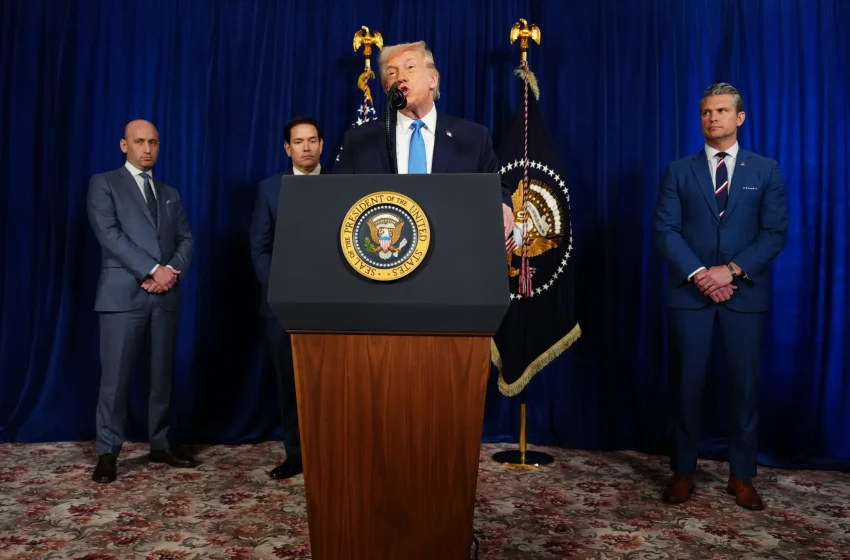
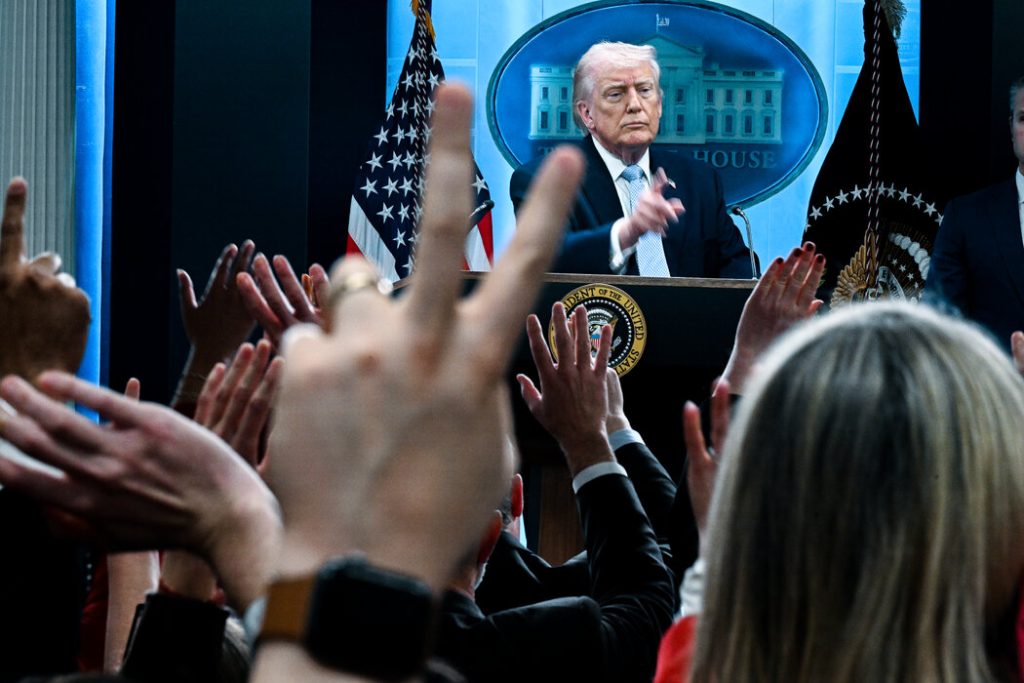
In a news conference on Saturday, President Trump seemed to recognize that — and did not shy away from it. He said, “We are going to run the country until such time that we can do a safe, proper and judicious transition,” going on to say that “we can’t take a chance that somebody else takes over.”
He added that the U.S. was “ready to stage a second and much larger attack if we need to do so.”
Trump even added, “We are not afraid of boots on the ground if we have to.”
Wow! Trump did not shrink from suggesting that we are undertaking the biggest nation-building project America has engaged in since Iraq and Afghanistan. Does he have any idea what a daunting and open-ended project that could be?
How the Trump administration is going to run Venezuela is simply not clear. Does it have an arrangement with the remnant of the Maduro regime to step aside? Does Trump plan to pose to Maduro’s rump team an ultimatum to leave and then the U.S. will organize elections? What is clear is that America running Venezuela would be a huge job, and there will be a significant portion of Trump’s isolationist MAGA base that is not likely to embrace that task.
I would also add that listening to Trump vastly exaggerate the threat posed by Venezuela and Maduro to the United States had very disturbing echoes of the way the George W. Bush team exaggerated the threat of weapons of mass destruction in Iraq to justify its invasion. When you don’t call things by their real and honest name, you get in trouble.
Many Venezuelans will celebrate Maduro’s demise, but he has significant armed allies — a band of thugs and narco-traffickers would be the best way to describe them — who have been controlling Venezuela through violent repression and the stealing of elections. What will be the balance of power of the pro- and anti-Maduro camps and what level of disorder will it produce?
Another analogy from the Middle East: Certain countries, when you decapitate their leadership, implode — they fall in on themselves; Yemen did so, for instance, because it was surrounded by strong neighbors and the ocean. But others, like Syria after the fall of its dictator, Bashar al-Assad, explode — they radiate out refugees and drugs and instability to the surrounding states.
According to the United Nations High Commissioner for Refugees, there are already nearly eight million Venezuelans — refugees, asylum seekers and economic migrants — who have fled their country, making for one of the world’s largest displacements, with the vast majority flowing into other Latin American and Caribbean nations, creating a humanitarian challenge for the whole region.
Venezuela has roughly 28 million people. Will the toppling of Maduro and clashes between his supporters and opponents exacerbate that refugee problem, destabilizing more countries in Latin America?
Another question: What are the leaders of other key nations — Xi Jinping in China, Vladimir Putin in Russia, Volodymyr Zelensky in Ukraine and Lai Ching-te in Taiwan — thinking now?
America indicted the leader of Venezuela on drug trafficking charges, the Justice Department said Saturday, and then went out and grabbed him from his own capital. When NATO ousted Qaddafi in Libya, it got a U.N. resolution first. China could well see this U.S. action as just one more precedent that would justify its toppling of the government of Taiwan at the time of its choosing. China will also most likely celebrate the fact that the U.S. will be more preoccupied than ever with its own hemisphere and have much less time and energy for curbing China’s regional power plays.
Another factor to keep in mind: Most of Venezuela’s oil is exported to China.
As for Putin, he is surely thinking that if the Trump administration gets bogged down trying to manage a post-Maduro Venezuela, it will have even less time, energy and resources to devote to Ukraine. Zelensky surely has to worry about the same thing today.
The Trump national security team is already a strange hybrid of freelancers — like Steve Witkoff, whose background is in real estate — and inexperienced hands like Defense Secretary Pete Hegseth and Marco Rubio, who is now serving as both secretary of state and national security adviser. With the peace processes in Ukraine and Gaza still very much unfinished, how many balls can this crew juggle effectively, with its seat-of-the-pants “wait to see what President Trump tweets first” way of doing business?
Finally, on Feb. 12, 2003, roughly a month before the Bush administration invaded Iraq, I wrote a column in which I said: “The first rule of any Iraq invasion is the pottery store rule: You break it, you own it. We break Iraq, we own Iraq — and we own the primary responsibility for rebuilding a country of 23 million people that has more in common with Yugoslavia than with any other Arab nation.” Secretary of State Colin Powell told CNN’s Larry King and later Bob Woodward that he adopted my formulation in presenting the Iraq war options to President George W. Bush.
It is hard not to ask that same question today. The Trump administration just broke the leadership of Venezuela; Trump now owns responsibility for what comes next there. If it leads to a new and better government for the people of Venezuela, great. Trump will be remembered for setting that process in motion.
But if it leads to Venezuela becoming a bigger boiling pot of instability, well, Trump, who likes to put his name on things, will have his name on that instability for a long time. As I said before of Obama in Libya, for everyone’s sake, please make my president lucky.
I like how Quico Toro, the founder of Caracas Chronicles, who was forced to flee Venezuela’s dictatorship, put it in an essay on Saturday. “Donald Trump and Marco Rubio will take a victory lap today. They deserve it,” he wrote. “They’ve struck an enormous blow against a genuinely evil regime. But they’ve not overthrown it. ‘Chavismo’ is very much still in control of Venezuela.
“Venezuelans all around the world are celebrating the fall of a vicious tyrant,” he added. “But if the regime manages to ride out this storm, we won’t be celebrating for long.”