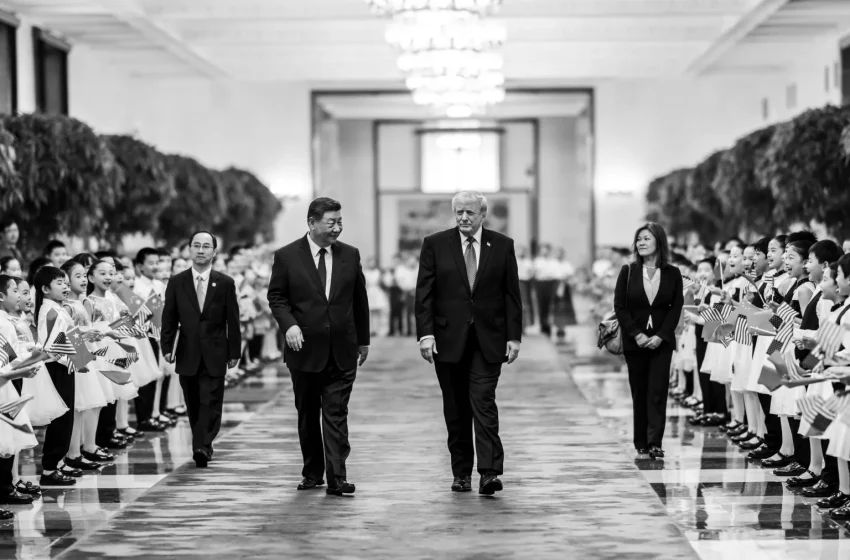
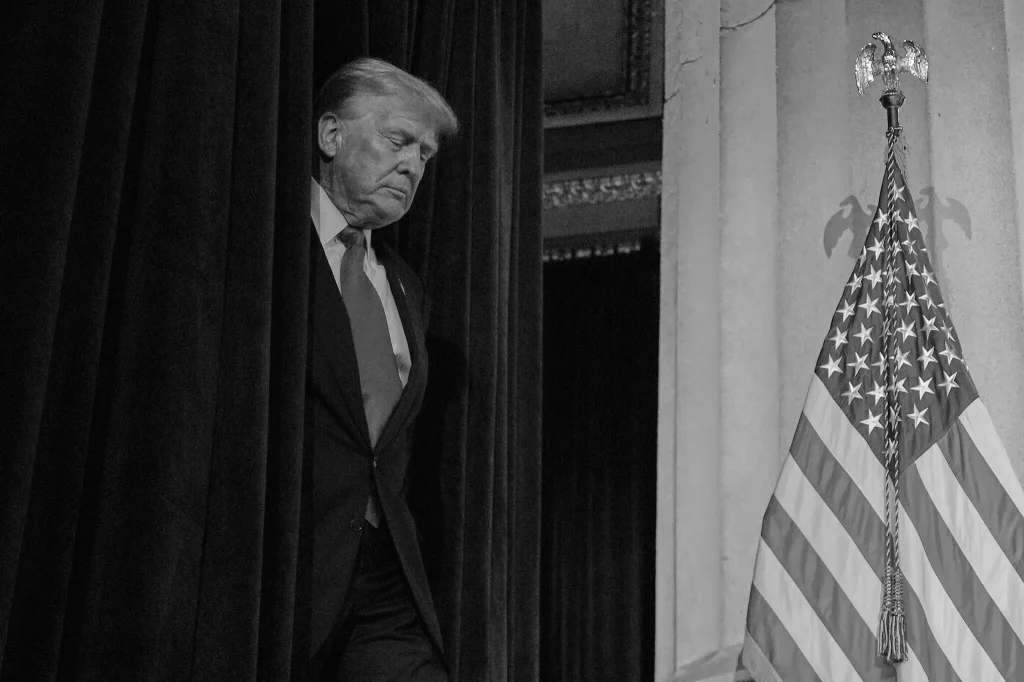
When President Donald Trump stepped off Air Force One on the evening of May 13 at Beijing Capital International Airport — greeted by an honor guard, a red carpet, and hundreds of young Chinese citizens waving flags — every major American news outlet was watching. For a brief moment, they agreed on what they saw. The pageantry was undeniable: a two-day state visit featuring extended bilateral talks at the Great Hall of the People, a walk through the Temple of Heaven, and a private lunch in Xi Jinping’s personal residence within the Forbidden City compound. The menu of topics was shared — trade, Taiwan, Iran — and the claimed deliverables were duly reported across the spectrum: 200 Boeing aircraft, roughly $10 billion in agricultural purchases, a new “U.S.-China Board of Trade,” and a vague Chinese commitment to pressure Iran over the Strait of Hormuz. Trump, flying home on May 15, called Xi “an incredible guy” and said they had “settled a lot of problems.” China’s foreign ministry called the summit “historical.”
Beyond these shared facts, the American press split — cleanly, and almost entirely along political lines — into two parallel accounts of what had just happened. To read the New York Times and Fox News on the same summit is to encounter two different diplomatic realities. That split is itself the story.
Taiwan: The Fault Line
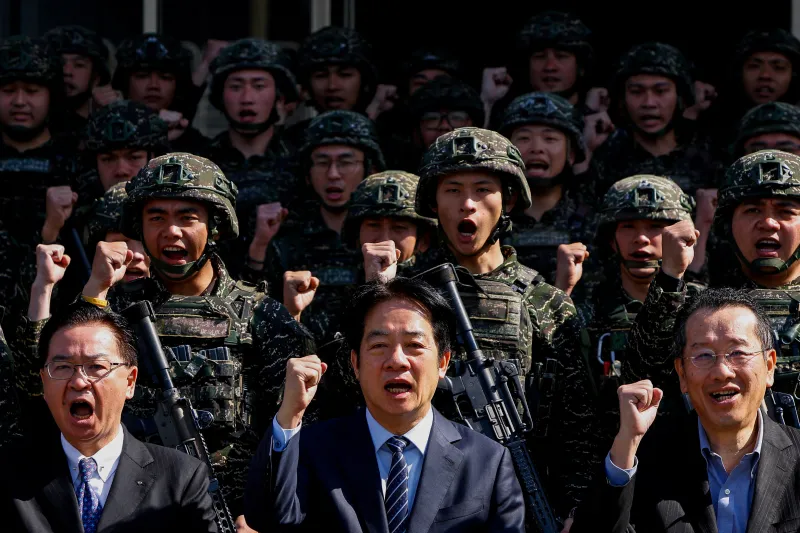
No single issue generated more alarm, or more interpretive divergence, than Taiwan. Trump’s remarks aboard Air Force One provided the raw material. He described Taiwan as “a very small island,” 59 miles from “a very, very powerful, big country,” while the United States was “9,500 miles away.” He said he was holding a pending arms sale “in abeyance” — “a very good negotiating chip for us, frankly” — and added that Taiwan “would be very smart to cool it a little bit.” China’s Foreign Minister Wang Yi, in remarks to state media after the summit, declared that Beijing had “sensed during the meeting that the U.S. side understands China’s position and attaches importance to China’s concerns.”
For the center-left press, this was alarming. CNN’s chief national security analyst called Trump’s failure to commit to the arms sale “a win for China.” Former Ambassador Nicholas Burns told PBS the United States appeared to be “backing away from our responsibilities.” Scholar Wen-Ti Sung said Taiwan was “holding its collective breath” over Trump’s “transactional rhetoric.” The Washington Post ran a headline that cut to the bone: “In pageantry and politics, China summit yields Xi’s goal — equal footing with the U.S.” A subsequent Post analysis concluded that Xi had used the 43 hours Trump spent in Beijing to “score diplomatic points while conceding nothing.”
Fox News read the same remarks as deliberate strategic leverage. Trump himself told Fox’s Bret Baier that “nothing has changed” on Taiwan policy, and Senator Marco Rubio, speaking to NBC News, insisted U.S. policy was “unchanged” and that taking Taiwan by force would be “a terrible mistake.” Fox’s Victor Davis Hanson argued Trump “would not sell out Taiwan for help in Iran when he doesn’t need their help.” The Wall Street Journal editorial board, however, broke from the conservative consensus, warning that Trump’s personal diplomacy risked “conceding core strategic interests” and characterizing China as the “main financier and industrial base” of America’s adversaries — a hawkish note that signaled the right’s own internal divisions on the question.
Iran: The Structural Contradiction
On Iran, the tension was less interpretive than factual. Trump told reporters he and Xi “feel very similar” on Iran — that Xi “feels strongly they can’t have a nuclear weapon.” The Washington Times and Fox News treated this as a diplomatic alignment worth celebrating. But CBS News and NBC News immediately surfaced the structural contradiction: China is Iran’s single largest oil buyer, and its interest in keeping the Strait of Hormuz open is a function of its own commercial needs, not of strategic solidarity with Washington. More telling was a discrepancy NBC highlighted: while Trump raised Iran throughout the summit, China’s official readout “made no specific mention of Iran.” The commitment Trump carried home was, in the words of multiple wire services, simply “vague.”
Trade: Déjà Vu
The trade deliverables were the ones the White House advertised most enthusiastically and the ones the press questioned most quickly. Fox News and the Washington Times presented the Boeing order and agricultural purchases as concrete wins for American workers. CBS News offered a market reality check: Boeing shares fell 3.8% after the announcement because investors were “underwhelmed.” A former U.S. Trade Representative negotiator told CBS the administration did not appear to “have a lot to show for the visit.” The New York Times, The Atlantic, and NBC all noted the uncomfortable historical parallel: nearly identical purchase commitments were made during Trump’s first Beijing visit in November 2017, only to be engulfed by the trade war that followed within months.
Two Frameworks, One Summit
The center-left press — the New York Times, Washington Post, CNN, CBS, NBC, PBS, and The Atlantic — converged on a single interpretive verdict: that Xi arrived as the summit’s architect and left as its beneficiary. The New York Times observed that Xi “arrived highly scripted, leaving no doubt that… the moment when China acts as a peer superpower had arrived,” while Trump “sounded conciliatory, the exact opposite of his portrayals of China in public appearances back home.” The Atlantic gave the verdict its sharpest edge, calling the visit a “Tribute Mission” and quoting Franklin Foer’s line that a superpower “exhausts itself in full view of the world, and the world moves on.” CNN summarized it in a single headline: “Trump’s Beijing visit was more vibes than details. And Xi set the tone.”
Fox News and the Washington Times told the opposite story. Fox’s preemptive framing — “Trump heads to China with the upper hand — and Xi knows it” — held through the summit’s conclusion. Victor Davis Hanson distilled the conservative case on air: “All the data show that the cards are in Donald Trump’s hands. He can be as magnanimous as he wants, but he has all the cards in his hand, and they don’t have any.” The Washington Times invested in a longer supply-chain frame, quoting Ambassador David Perdue on the strategic vulnerabilities in “rare earth elements, magnets, commercial shipbuilding and pharmaceuticals” that the summit was meant to begin redressing.
Opinion writing across the spectrum was loudest on Taiwan — the one issue where the existential stakes were high enough to cut through partisan positioning on both sides. It was also on Taiwan that the Wall Street Journal diverged most sharply from the broader right-media consensus, indicating that the strategic hawks and transactionalists within conservatism have not resolved their disagreement about the ultimate direction of American China policy.
The Autumn Visit and What It Inherits
China’s foreign ministry confirmed, after the summit concluded, that Xi Jinping will visit the United States this fall at Trump’s invitation. Xi has not been to the White House since September 2015, when he met President Obama. The eleven intervening years encompass almost the entirety of the modern deterioration of U.S.-China relations.
The fall visit arrives already shaped by the Beijing summit’s media legacy. Most outlets — whatever their political orientation — ultimately characterized the summit as what might best be described as a carefully managed but structurally inconclusive encounter: warm in atmosphere, thin in binding commitments, and significant mainly as a signal that both governments prefer managed competition to open confrontation. That judgment, now embedded in the American public’s understanding of the relationship, sets the baseline against which Xi’s Washington visit will be measured.
The terms are already unfavorable for dramatic revision. Trump publicly embraced the “G-2” framing — calling the United States and China “the two great countries” — validating a framework that Beijing has sought for years as recognition of co-equal global standing. He described his counterpart as a leader of a country too powerful and too close to Taiwan for the United States to realistically contest militarily. Xi, for his part, departs Beijing having conceded nothing verifiable on Taiwan, trade enforcement, technology restrictions, or Iran, while securing the spectacle of an American president traveling to China, the G-2 designation, and an invitation to the White House.
Whether the autumn visit produces more durable results will depend on what happens in the months between. On Taiwan, on the Iran conflict, on fentanyl enforcement, and on whether the “Board of Trade” produces anything beyond its own announcement — these are the open files the two governments carry into their next meeting. The American media, divided as it is, has already written the context in which those negotiations will be read. Xi arrives in Washington as the leader who set the terms in Beijing. The summit on American soil begins, in other words, where the one in China ended: with the world’s most consequential bilateral relationship still fundamentally unresolved, and the most important questions about its future still unanswered.